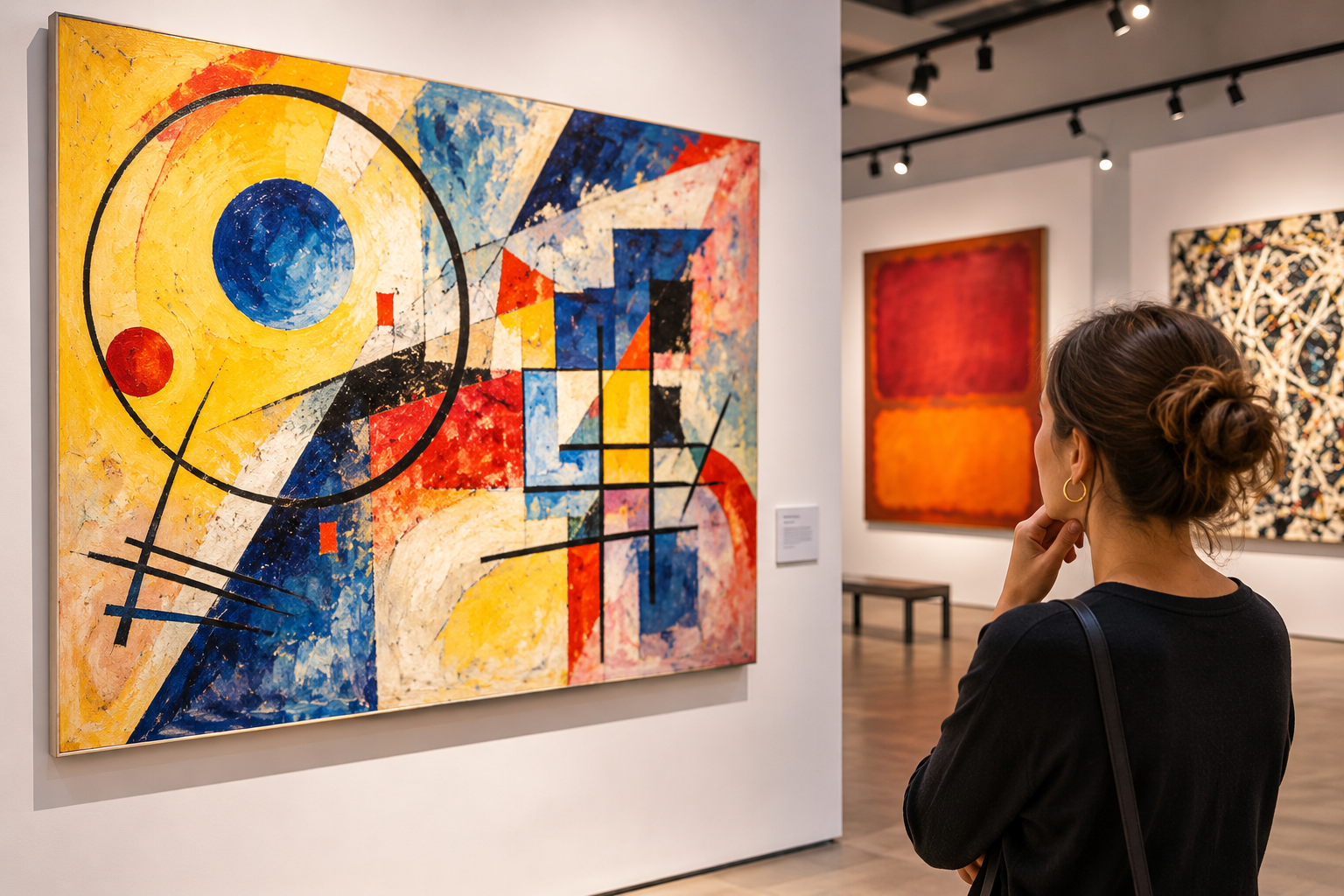
Abstract Art: History, Characteristics and the Evolution of Visual Language
An artistic language that transformed painting and opened up new ways of expressing emotions, ideas and concepts through colour, shape and composition.
Abstract art represents one of the most important transformations in the history of artistic creation. Unlike traditional approaches that focus on depicting recognisable people, landscapes and objects, this movement proposes a visual language based on colours, lines, geometric shapes, textures and compositions that do not need to reproduce reality faithfully.
Its emergence fundamentally changed the way painting was understood and expanded the possibilities of artistic expression. From its earliest developments, artworks no longer depended exclusively on figurative representation and began exploring new ways of communicating feelings, thoughts and experiences.
Today, abstract art remains an essential reference for understanding modern and contemporary art. Its principles continue to influence painting, sculpture, design, architecture and many other visual disciplines.
What Is Abstract Art?
Abstract art is a form of artistic expression whose primary purpose is not to reproduce recognisable elements of the physical world. Instead of representing reality directly, it uses visual resources such as colour, line, shape, rhythm and composition to create images with their own meaning.
An abstract painting may consist of clearly defined geometric figures, colour fields, spontaneous brushstrokes or combinations of different materials. In each case, the focus lies on the relationship between the elements that make up the artwork and the sensations they may create in the viewer.
This does not mean that abstract art lacks meaning or content. On the contrary, it can communicate emotions, philosophical reflections, spiritual ideas and personal interpretations of the world. The difference is that it does not need recognisable images to do so.
The Origins and History of Abstract Art
The development of abstract art is closely connected to the cultural, social and technological changes that took place between the late nineteenth and early twentieth centuries.
During this period, many artists began questioning academic conventions and the importance traditionally given to realistic representation. Photography, new cultural movements and changing ways of interpreting the world helped encourage alternative creative possibilities.
The First Steps Towards Abstraction
Before abstraction became established as an independent artistic movement, several artists were already experimenting with simplified forms, intense colours and greater compositional freedom.
The artistic investigations of movements such as Impressionism, Post-Impressionism and Fauvism helped challenge traditional representation. Colour began to acquire greater independence, while shapes were no longer necessarily subordinate to the visual appearance of objects.
Wassily Kandinsky and the Birth of Abstraction
One of the most important figures in the emergence of abstract painting was Wassily Kandinsky. His artistic research explored the relationship between colour, shape and emotion, emphasising the ability of painting to communicate without relying on figurative representation.
His compositions used lines, circles, geometric shapes and colour combinations to create an independent visual language. His work played a decisive role in establishing the foundations of modern abstraction.
The Expansion of the Avant-Garde Movements
During the first decades of the twentieth century, abstraction developed in several different directions. Artists from different countries explored new ways of organising visual elements and created approaches that influenced the evolution of painting, sculpture and design.
Among these developments, Suprematism, Neoplasticism and Constructivism stood out for their emphasis on geometry, order and the relationships between shapes.
The Main Characteristics of Abstract Art
Although abstract art includes numerous styles and approaches, several characteristics help define its visual language.
1. Independence from Figurative Representation
The artwork does not need to depict recognisable objects, people or landscapes. Shapes can exist independently and establish visual relationships without directly reproducing reality.
2. The Importance of Colour
Colour is one of the fundamental elements of abstraction. It can create contrasts, establish visual balance, communicate emotions or build compositions in which every shade has a specific purpose.
3. Experimentation with Shapes
Geometric figures, irregular lines, spontaneous brushstrokes and patches of paint make it possible to develop different visual structures. Shape is no longer simply a tool for representing objects; it becomes a central element of artistic creation.
4. Freedom of Interpretation
One of the distinctive features of abstract art is that it allows different interpretations. Each viewer can establish personal connections with an artwork based on their sensitivity, experience and visual perception.
5. Composition and Visual Balance
The arrangement of elements determines how an artwork functions. The balance between shapes, colours, empty spaces and textures can create sensations of movement, tension, harmony or dynamism.
The Main Movements Within Abstract Art
Abstraction is not a single artistic style. Throughout the twentieth century, different movements emerged, each developing its own interpretation of this visual language.
Geometric Abstraction
This approach is characterised by the use of geometric shapes, defined lines and organised structures. It seeks to establish relationships between visual elements through proportion, symmetry and balance.
Neoplasticism, associated with Piet Mondrian, is one of the best-known examples of this tendency. Its compositions use straight lines and primary colours to create carefully organised visual structures.
Abstract Expressionism
Developed particularly in the United States during the 1940s and 1950s, Abstract Expressionism placed great importance on gesture, spontaneity and individual expression.
Artists such as Jackson Pollock and Mark Rothko developed very different approaches, but both helped expand the emotional and formal possibilities of abstract painting.
Suprematism
Founded by Kazimir Malevich, this movement advocated the use of essential geometric shapes and a form of painting liberated from the representation of objects. The square, circle and other basic figures became central elements.
Constructivism
Constructivism developed an artistic approach connected to structure, geometry and experimentation with materials. Its principles also had a significant influence on graphic design, architecture and applied arts.
Key Artists in the History of Abstract Art
The evolution of abstraction is closely linked to artists who transformed painting and developed new ways of understanding composition and visual language.
Wassily Kandinsky
Considered one of the essential figures of abstraction, Kandinsky explored the relationship between music, colour and painting. His compositions demonstrated that shapes and colours could communicate emotional experiences without depicting recognisable objects.
Piet Mondrian
His work evolved towards geometric abstraction based on vertical and horizontal lines, rectangular surfaces and primary colours. His visual language had a profound influence on modern design and architecture.
Kazimir Malevich
He was a decisive figure in Suprematism. His artistic research focused on essential geometric shapes and the independence of painting from the representation of the physical world.
Jackson Pollock
A leading representative of Abstract Expressionism, Pollock developed a gestural technique based on the spontaneous application of paint across large surfaces. His compositions introduced a new relationship between movement, material and artistic creation.
Mark Rothko
His large areas of colour explored the emotional possibilities of painting. Through layered colour fields, he created works that invite quiet contemplation and personal interpretation.
Techniques and Materials Used in Abstract Painting
Experimentation is an essential part of abstract art. Artists have used different techniques to expand the expressive possibilities of their work and explore new relationships between materials.
- Dripping: involves allowing paint to fall or splatter onto a surface, creating compositions based on gesture and movement.
- Layering: makes it possible to combine different colours, textures and levels of depth.
- Collage: incorporates paper, photographs, fabrics and other materials to construct visual compositions.
- Palette knife: allows artists to apply, drag and spread paint, creating relief and texture.
- Mixed media: combines different techniques and materials within a single artwork.
- Experimental surfaces: uses canvas, wood, paper, metal and other materials to expand creative possibilities.
The choice of technique depends on the artist’s intentions and the visual result they wish to achieve. In many cases, the creative process and experimentation are just as important as the finished artwork.
The Influence of Abstract Art on Design and Visual Culture
Abstraction was not limited to painting. Its principles influenced disciplines such as architecture, industrial design, illustration, fashion and visual communication.
The use of geometric shapes, contrasting colours and simplified compositions helped transform the appearance of numerous objects and spaces. It also contributed to new ways of organising visual information and developing graphic identities.
In interior design, abstract artworks offer considerable freedom when creating distinctive environments. Their shapes and colours can complement different decorative styles and become central features within a room.
To discover other artistic expressions and cultural projects that offer a broader perspective on visual creation, it is also worth exploring spaces dedicated to art and heritage, such as the artistic and cultural offerings of Valencia.
Abstract Art Today
Abstraction continues to evolve and adapt to cultural and technological changes. Contemporary artists combine traditional procedures with new materials, digital tools and experimental formats.
Abstract painting now exists alongside installations, sculpture, digital artworks and interactive projects. Some creations explore the relationship between art and technology, while others return to traditional manual techniques to investigate the possibilities of colour and material.
This diversity demonstrates that abstraction does not belong exclusively to a particular historical period. It is a visual language that continues to offer opportunities for experimentation and new ways of interpreting the world.
How to Interpret an Abstract Artwork
Approaching an abstract painting can be challenging when viewers expect to find a recognisable image or a clearly defined story. However, a few simple guidelines can help people appreciate this type of artwork.
- Observe the composition: identify how the shapes are arranged and how they relate to one another.
- Analyse the colours: pay attention to contrasts, shades and the sensations they create.
- Explore the textures: notice whether the surface is smooth, contains relief or combines different materials.
- Look for movement: consider whether the composition communicates stability, dynamism, tension or balance.
- Develop a personal interpretation: reflect on the emotions and associations the artwork evokes without necessarily looking for a single correct answer.
Understanding abstract art does not mean finding a universal meaning for every shape or colour. It means learning to observe and develop a personal relationship with the artwork.
Frequently Asked Questions About Abstract Art
Who created abstract art?
There is no single creator of all abstract art, as it emerged from different artistic investigations. Wassily Kandinsky is considered one of its most important pioneering figures.
What are the main characteristics of abstract art?
Its main characteristics include independence from figurative representation, the importance of colour, experimentation with shapes, compositional freedom and multiple possibilities for interpretation.
What is the difference between abstract and figurative art?
Figurative art represents recognisable elements of reality, while abstract art uses shapes, colours and compositions that do not need to reproduce identifiable objects or scenes.
Which artists are important in abstract art?
Some of the most representative names include Wassily Kandinsky, Piet Mondrian, Kazimir Malevich, Jackson Pollock and Mark Rothko.
Does abstract art still exist today?
Yes. It continues to develop through painting, sculpture, installations, digital art and other forms of contemporary experimentation.
Conclusion: An Artistic Language Without Limits
Abstract art transformed the history of visual creation by demonstrating that an artwork does not need to reproduce reality faithfully to communicate ideas, emotions and experiences. Its development opened up new possibilities for painting and allowed visual elements to acquire an independence that had previously played a much smaller role.
From Kandinsky’s early investigations to contemporary artistic proposals, abstraction has evolved through different movements, techniques and materials. Its influence remains present across numerous disciplines and demonstrates the ability of art to reinvent itself.
Approaching abstraction means discovering a different way of looking. It is an invitation to observe colour, shapes and compositions without necessarily depending on what they represent, leaving room for imagination and personal interpretation.